
From vision to fleet reality
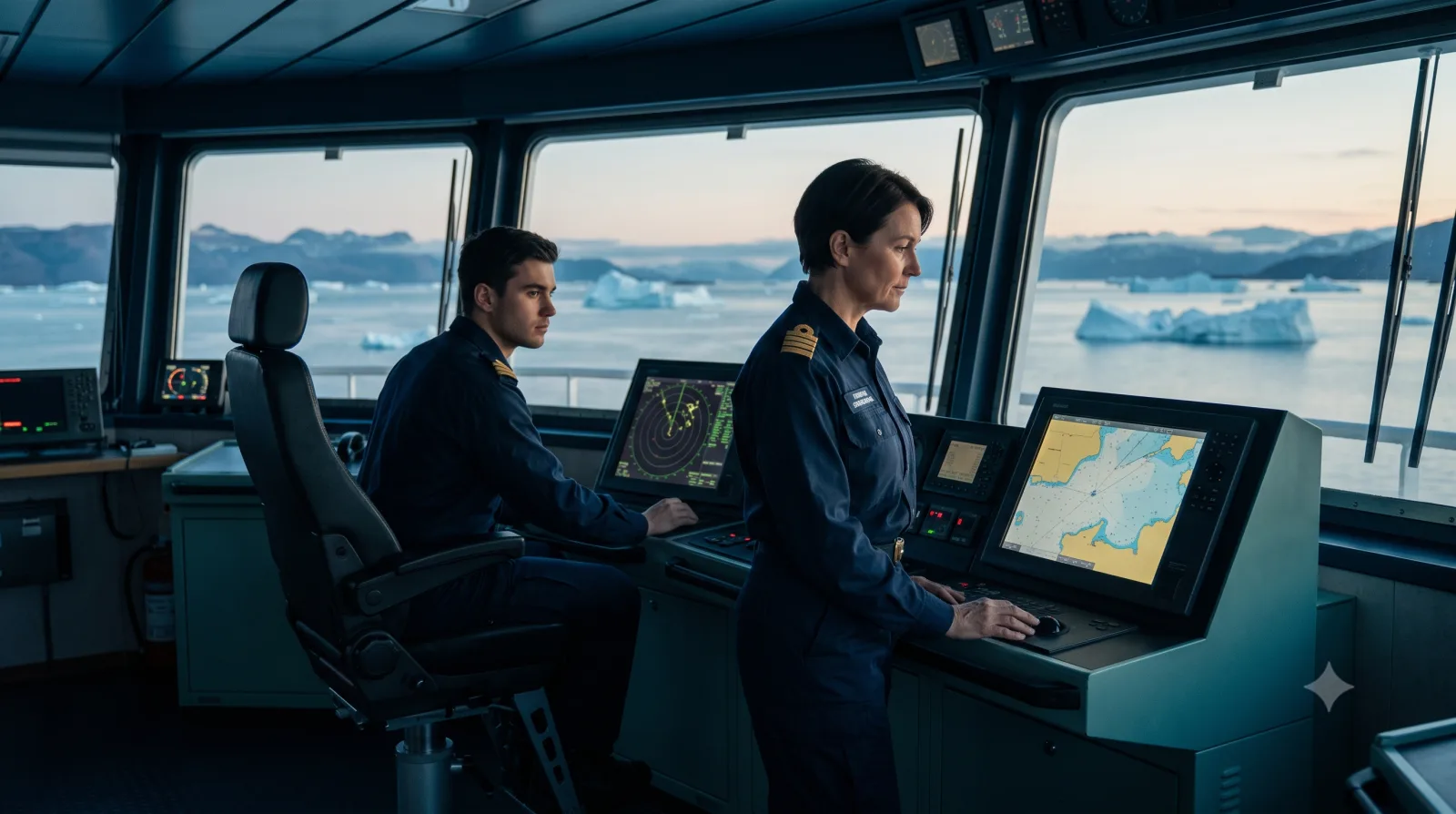
The same SafyrScore™ that guides an officer on the bridge rolls up into the view the DPA sees ashore — one number, understood the same way at every level.
Maritime audit is a leading indicator. Treat it like one.
Safyrmind turns maritime findings into actionable intelligence. Every finding is interpreted against the vessel, equipment, applicable regulations, historical findings and previously validated CAPAs. Our ontology-guided retrieval and domain-adapted AI then generate a finding-specific corrective and preventive action, with supporting evidence and regulatory provenance. Every validated CAPA makes the system smarter — turning isolated findings into fleet-wide intelligence.
Every fleet operator carries a growing operational-risk envelope — vetting failures, PSC detentions, P&I claims, insurance surprises. Traditional QHSE tools capture findings after they happen. Institutional knowledge walks off with every retiring officer. The audit rhythm has not evolved for the scale, complexity, and stakes of today's shipping.
Ten similar findings across a fleet do not become a systemic signal. They become ten CAPAs, closed independently, with the same gap reopening on the next vessel.
The signals that predict failure exist across telemetry, records, and behaviour — but they sit in silos. No one sees the vessel deteriorating until the inspector does.
Operational-risk exposure is one of the largest classes of loss a shipping company carries — and it is invisible to the finance function until an event materialises. Insurance renewals, charter approvals, and reinsurance strategy all depend on data no one is producing.
safyrmind doesn't run on a static checklist someone updates by hand. It runs on Safyrmind MARIQ™ — a purpose-built, continuously growing knowledge base of audit questions drawn from governing regulations, standards, and industry requirements — paired with a domain-specialised model that reasons about every finding the way an experienced auditor would, and a proprietary scoring methodology that turns compliance data into one defensible risk number. The system gets sharper with every validated finding, not just every release.
Every question is written, vetted, and approved by professional marine auditors and captains.
MARIQ™ breaks each audit area down to its smallest sub-topic, so nothing is assumed or left implicit. Every question ships with detailed guidance and reference images to remove ambiguity for whoever's asking it — captured once by our expert panel, mapped for complete coverage of governing regulations and standards.
The maritime ontology — Safyrmind maps findings to vessels, equipment, components, failure modes, regulations, inspection regimes, operational conditions and historical CAPAs, allowing the AI to retrieve and reason over relationships rather than isolated text.
Powered by Safyrmind-LLM™, our domain-specialized model, CAPA Forge™ reads every finding against MARIQ™'s vetted knowledge base and your fleet's own history, then predicts the finding-specific corrective and preventive action — citing the same regulatory basis a human auditor would reach for. Every prediction is reviewed before it's finalized, and once validated, it becomes new domain knowledge the system draws on next time.
One consistent methodology for comparing operational risk across vessels and fleets.
SafyrScore™ combines open findings, CAPA closure behaviour, vessel age, and other operational factors into a single quantified score — recalculated continuously, not just at audit time, so a change in condition is visible in the gap between inspections, not only at the moment one happens. The same methodology applies fleet-wide, so a score on one vessel means the same thing as a score on another.
safyrmind is designed for the concentric rings of accountability in a shipping company — onboard command, shore management, and the finance function that translates operational risk into commercial reality.
One question: what needs your authority today? Audits arrive in flow, on the tablet, with a copilot who thinks like a peer.
SMS integrity as a defensibility question. Every signal groundable to a record; every finding on the same category becomes a programme-level review.
Which vessel needs you most this week? Ranked by real-time safety, with the calendar 12 weeks ahead and the visit briefing pre-drafted.
No vessel walks into a SIRE 2.0 headed for failure. Continuous chapter-level readiness with mock inspections and predicted pass probability.
Operational risk quantified. Expected Annual Loss with confidence bands, live detention cost, insurance-renewal prep in one view.
Safyrmind combines a maritime domain ontology, evidence-grounded retrieval, domain-adapted generation, human validation, and fleet-level learning into a single intelligence architecture. The layers work independently where required, but together create a closed loop in which findings are contextualised, relevant evidence is retrieved, corrective actions are generated and validated, and the resulting knowledge strengthens future predictions across the fleet.
The right audit fires to the right rank at the right moment — driven by age, event, prediction, campaign, and systemic signals.
Native tablet, mobile, web, mixed-reality — each engineered for its operating context. Offline-first, wet-hand tolerant, one-hand safe.
Every finding becomes a 3-minute rank-specific micro-module. Every intervention measured 90 days out — dollars saved per dollar spent.
A working surface, not a compliance report. The SafyrScore™ composite decomposes to five dimensions and nine regime lenses. Every panel resolves to an action.
A maritime peer at hand — clause interpretation, consequence differentiation by port MoU, sourced to the original text. Voice-first onboard.
Reads gauges, documents, and photos. Transcription is the error; safyrmind removes it. Every capture cross-checked and confidence-banded.
Weekly digests, monthly reviews, quarterly board packs, closure reports — auto-drafted, ready to defend.
Every audit question in Safyrmind MARIQ™, every evidence requirement, and every finding is tagged to one or more of nine regimes. The same underlying evidence propagates across every regime where it is admissible — captured once, mapped to every applicable requirement.
13 chapters, three question tiers. Pre-inspection preparation, mock inspections, chapter-level readiness scoring.
Risk screening for bulk carriers, general cargo, container, and ro-ro ships. Continuous readiness, never point-in-time.
Paris, Tokyo, IO, Caribbean, Med, Black Sea, Abuja, Viña del Mar, Riyadh MoUs + USCG. CIC campaign preparation built-in.
DNV, LR, ABS, BV, ClassNK, KR, CCS, RINA, IRS. Annual, intermediate, special surveys — plus enhanced survey programme.
Marshall Islands, Panama, Liberia, Singapore, Malta, Bahamas, HK, UK, Cyprus, Greece — each flag's emphasis modelled.
IG club condition surveys, entry surveys, thematic loss-prevention. Findings routed through CAPA Forge™.
ISO 9001, 14001, 45001, 50001 as one integrated management system. Single audit event, multi-standard evidence.
Rolling 12-month programme per IMO Res. A.741(18). Auditor-independence verified. DPA sign-off queue.
Marine, Technical, Safety, Navigation, Annual VDR — five programmes, own rhythm, own ownership, own question banks.
13 chapters, three question tiers. Pre-inspection preparation, mock inspections, chapter-level readiness scoring.
Risk screening for bulk carriers, general cargo, container, and ro-ro ships. Continuous readiness, never point-in-time.
Paris, Tokyo, IO, Caribbean, Med, Black Sea, Abuja, Viña del Mar, Riyadh MoUs + USCG. CIC campaign preparation built-in.
DNV, LR, ABS, BV, ClassNK, KR, CCS, RINA, IRS. Annual, intermediate, special surveys — plus enhanced survey programme.
Marshall Islands, Panama, Liberia, Singapore, Malta, Bahamas, HK, UK, Cyprus, Greece — each flag's emphasis modelled.
IG club condition surveys, entry surveys, thematic loss-prevention. Findings routed through CAPA Forge™.
ISO 9001, 14001, 45001, 50001 as one integrated management system. Single audit event, multi-standard evidence.
Rolling 12-month programme per IMO Res. A.741(18). Auditor-independence verified. DPA sign-off queue.
Marine, Technical, Safety, Navigation, Annual VDR — five programmes, own rhythm, own ownership, own question banks.
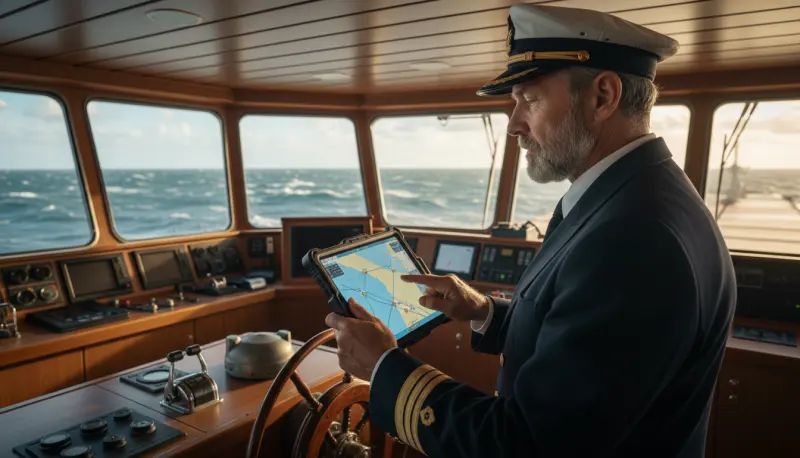
A mid-size tanker operator — 28 vessels, average age 11 years, mixed trade — modelled at rollout and again 12 months later. The score, the trend, and the metrics that drive them. No editorial gloss; the numbers that changed.
Every input below drives the same SafyrScore™ methodology in real time. Impact ranges are calibrated against IG Club and industry-benchmark data. The model estimates potential savings using comparable fleet benchmarks and your fleet profile.
Adjust the sliders. The result updates as you move.
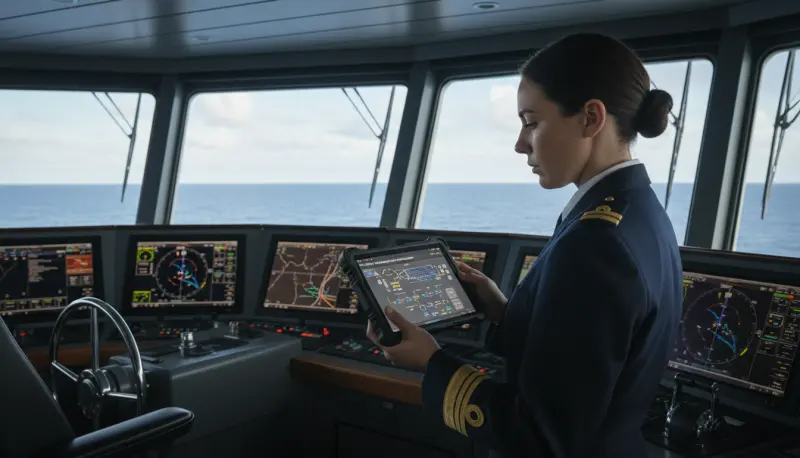
Founded by Master Mariners and software engineers who bring together two kinds of expertise rarely found in the same team: deep maritime operating experience and deep technical expertise in AI, LLMs, and enterprise software.
The wider team combines Master Mariners, ex-vetting inspectors, DPAs, technical superintendents, AI researchers, and enterprise engineers. That combination gives safyrmind both the domain depth to understand the problem and the engineering depth to solve it at the system level.
Our engineering founders have built software and technology at some of the world's leading technology companies, with deep expertise in AI and production-grade software systems. Our maritime founders have commanded ships, conducted audits, defended findings, and lived the operational consequences the platform is designed to anticipate.
We are building a maritime-first AI platform — not a general-purpose LLM with a shipping wrapper. Maritime knowledge, finding patterns, regulatory context, operational workflows, and rank-specific decisioning are embedded throughout the system.
We don't just apply AI to maritime.
We combine maritime expertise with the engineering depth to build AI that understands how the industry actually works.
Built from real audits, real findings, real operational decisions, and decades of maritime experience. The domain is the source of truth, not simply a target market.
Deep AI engineering spanning model development, adaptation, and production deployment — built for one domain, not retrofitted from a general-purpose model.
Recommendations are grounded in clauses, records, evidence, and modelled probabilities with explicit confidence — not unsupported AI opinions.
AI assists; accountable officers decide. Sign-off authority remains with the person responsible for the operation.
AES-256 at rest, TLS 1.3 in transit.
EU · US · APAC regions — you choose primary and DR.
Actor, timestamp, before / after — every mutation.
Every output traces to inputs, corpus, and version.

Book a 30-minute demo. We will show the platform running on a comparable fleet to yours — with the risk model, the copilot, and the CFO view tuned to your operational reality.